Featured
Clone a Private GitHub Repo Onto Your Cloud GPU VM From Skyportal
Save a GitHub token once and SARA clones your private repo onto an AWS or GCP GPU VM. Later commands start in the repo's root folder.
Read full blogDiscover stories, tips, and resources to inspire your next big idea.
Save a GitHub token once and SARA clones your private repo onto an AWS or GCP GPU VM. Later commands start in the repo's root folder.
Read full blog
Set up cloud GPU VMs the same way every time. SARA writes and saves Ansible playbooks with you and runs them on each VM over SSH.
Read full blog
Your cloud CLI's kubeconfig runs an exec plugin, which Skyportal won't run. A read-only service account token connects EKS, GKE or AKS in a few kubectl commands.
Read full blog
Connect a GPU VM from AWS, GCP, Lambda, RunPod or Vast.ai to Skyportal with one SSH login. No cloud keys, GPU monitoring from the start, and SARA in the chat.
Read full blog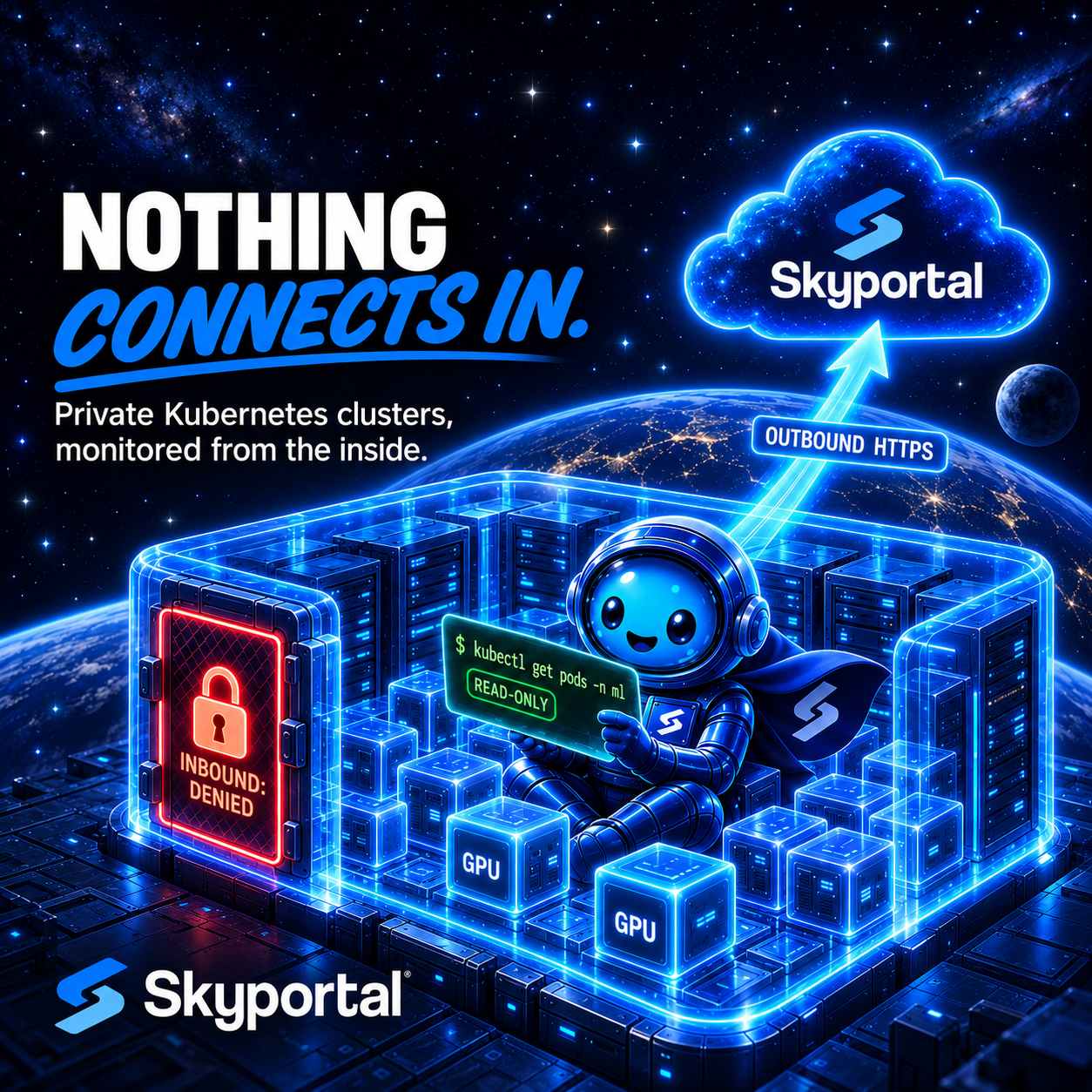
Connect a private Kubernetes cluster to Skyportal over outbound HTTPS. No kubeconfig leaves the cluster, nothing connects in, and SARA can still read pods, logs and pod sizing.
Read full blog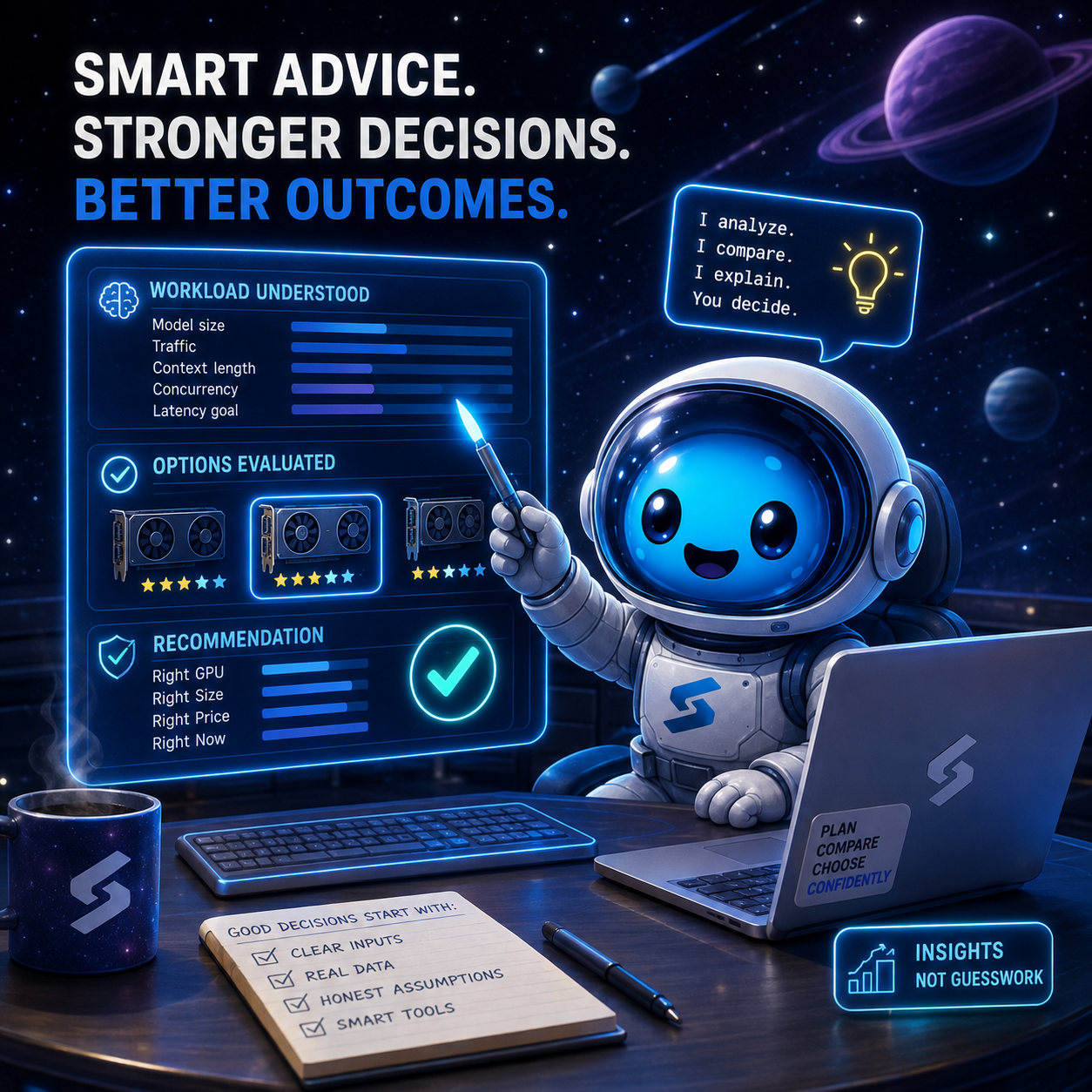
They start with a product page, a familiar accelerator name, or a cloud instance someone used on the last project. Then comes the spreadsheet: model weights, context length, KV cache, concurrency, traffic, headroom, hourly rates, provider availability. One uncertain input quietly becomes five confident-looking numbers.
Read full blog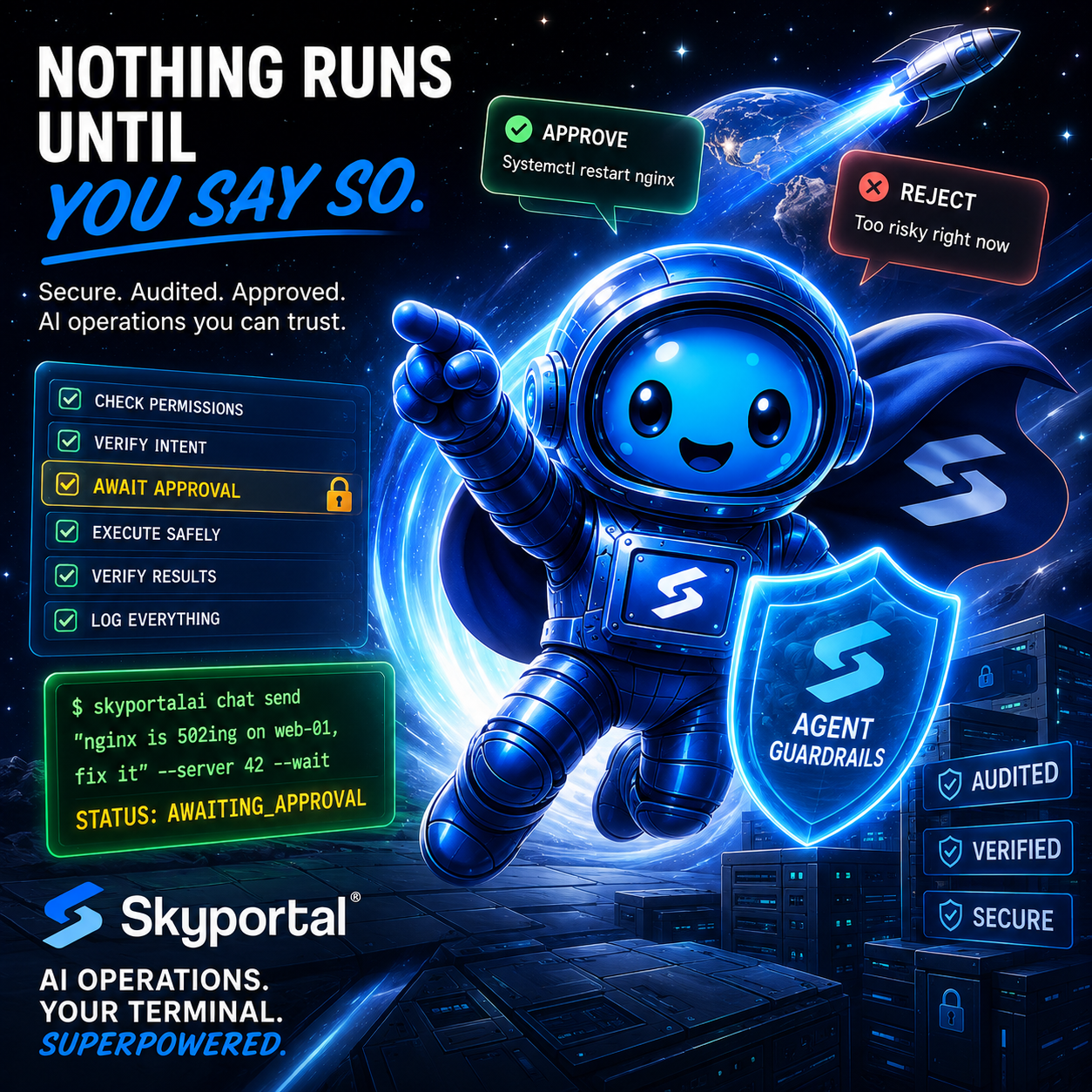
An AI agent that can read your infrastructure is a convenience. An agent that can *change* your infrastructure is a decision you have to be able to defend on Monday morning. That distinction has driven most of what we shipped since the [SkyPortal SDK and CLI launch](/blog/introducing-skyportal-sdk-cli-ai-infrastructure-operations/). The hard problem in AI ops is not getting a model to suggest `systemctl restart nginx`. It is building the machinery around that suggestion so a platform team can hand an agent real credentials and still answer four questions: what is it allowed to do, who said yes, how do we know it actually worked, and what did it see along the way. Here is how SkyPortal answers each one.
Read full blog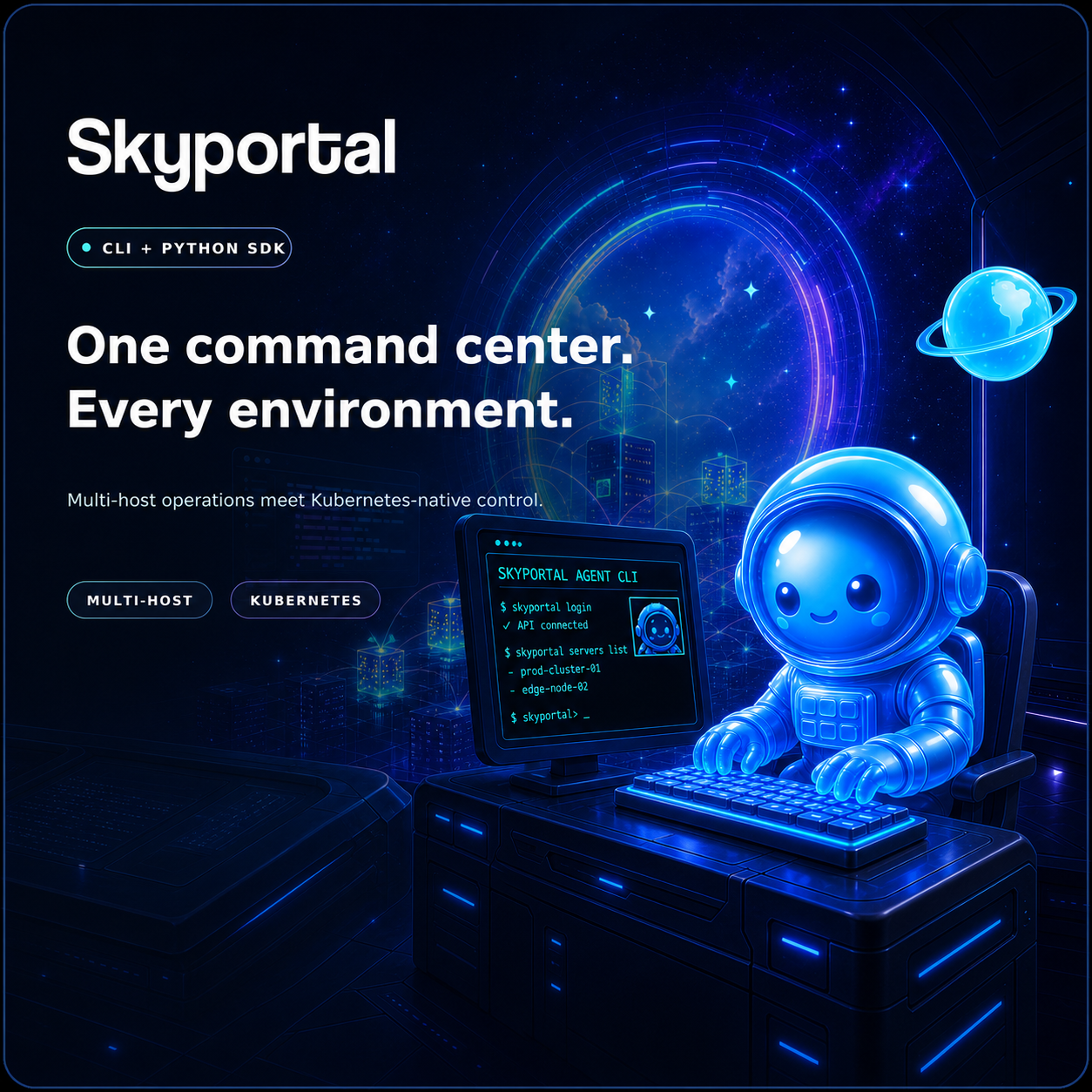
Infrastructure rarely lives in one neat box. A production AI stack can span GPU servers, application hosts, staging environments, and multiple Kubernetes clusters—often while an incident is already unfolding. The latest SkyPortal CLI and Python SDK updates bring those systems into one automation-friendly command center. SkyPortal now gives platform engineers, DevOps teams, SREs, MLOps engineers, and AI infrastructure teams a consistent way to scope an investigation across multiple hosts, connect Kubernetes clusters, automate agent chats, and keep human approval in the loop for sensitive changes.
Read full blog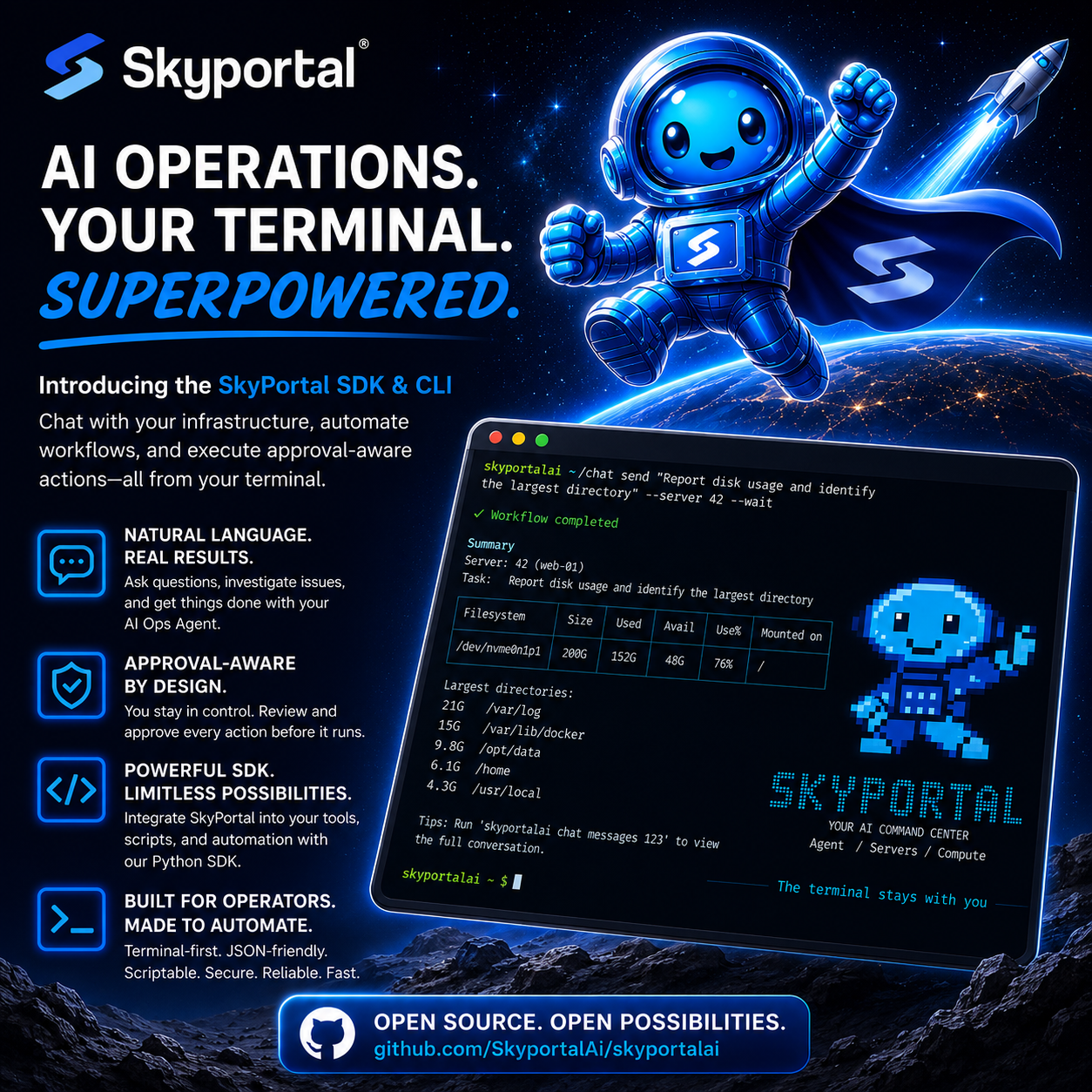
Infrastructure teams live in terminals, automation scripts, and Python—not browser tabs. Whether you're investigating an outage, checking system health, or automating operational workflows, switching between tools slows you down.
Read full blog
If you are searching for a Neptune.ai alternative, you are probably not looking for a shiny dashboard. You are looking for continuity.
Read full blog
The AI revolution has ignited unprecedented demand for computational resources. Organizations increasingly realize AI success isn't just about advanced algorithms—it's about having the right GPU infrastructure strategy. As AI models grow complex and datasets expand exponentially, scalable GPU infras
Read full blog
When building your AI and machine learning apps, maximizing the performance of your GPU can significantly impact the efficiency and effectiveness of your models. Whether you're using NVIDIA H100 or H200 GPUs, these strategies will help you get the most out of your hardware.
Read full blog
The rise of DeepSeek's powerful AI models, particularly the R1 reasoning model, has led to a significant increase in demand for Nvidia's H200 GPUs among cloud providers and enterprises. Despite an initial dip in Nvidia's stock price, the popularity of DeepSeek's open-source models is driving up inte
Read full blog
Imagine training a 175-billion-parameter AI model in days instead of months. Or deploying a real-time medical imaging system that diagnoses tumors with sub-millisecond latency. These aren’t hypotheticals—they’re realities powered by NVIDIA’s H200 Tensor Core GPU, the unsung hero behind today’s AI br
Read full blog
Want to supercharge your AI model training on Hugging Face? The NVIDIA H200 GPU is revolutionizing how we handle large language models and AI workloads. In this comprehensive guide, we'll explore how this groundbreaking GPU transforms AI model development on Hugging Face's platform.
Read full blog
In the realm of artificial intelligence and machine learning, NVIDIA’s GPUs have long been the gold standard for performance, reliability, and efficiency. With each new iteration, NVIDIA pushes the boundaries of what’s possible, and the newly announced H200 GPU marks another leap forward in the indu
Read full blog
In light of recent security alerts, it's essential for all users of Nvidia GeForce GPUs—and other Nvidia graphics cards like Nvidia RTX, Quadro, NVS, and Tesla models—to update their drivers immediately. Nvidia has issued an urgent warning about eight newly discovered vulnerabilities in its display
Read full blog
In the world of software development, coding has traditionally been a process of writing detailed instructions, line by line, in a specific syntax to create applications, websites, and systems. While it's rewarding, it requires patience, deep knowledge, and sometimes a lot of trial and error. But im
Read full blog
As artificial intelligence (AI) continues to revolutionize industries, drive innovation, and transform our daily lives, one technological component stands out for making rapid advancements possible: the graphics processing unit, or GPU. Originally developed for rendering graphics in gaming and visua
Read full blog